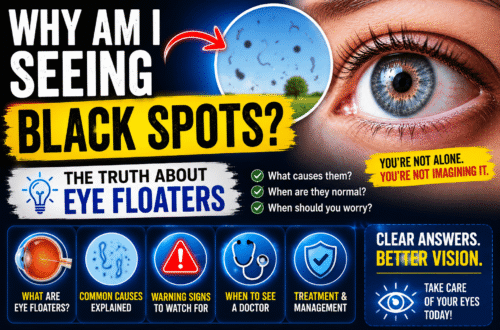






Have you ever looked up at a bright blue sky or stared at a white computer screen and noticed tiny dots, cobwebs, or wiggly threads drifting across your field of vision? When you try to look directly at them, they seem to dart away. These mysterious shapes are commonly known as eye floaters.
While experiencing visual disturbances can be unsettling, eye floaters are an extremely common phenomenon that many people encounter at some point in their lives. However, understanding what causes them, when they are harmless, and when they signal a medical emergency is crucial for preserving your long-term eye health.
In this comprehensive guide, we will explore everything you need to know about seeing black spots in your vision, the underlying mechanisms, risk factors, and actionable steps to maintain healthy eyes.
What Are Eye Floaters?
Eye floaters are tiny clumps of gel or cellular debris floating inside the vitreous humor—the clear, jelly-like substance that fills the back portion of your eyeball and helps it maintain a round shape.
Even though these spots appear to be sitting right in front of your eyes or on the surface of your contact lenses, they are actually floating inside your eye. When light passes through the vitreous, these clumps cast tiny shadows onto your retina—the light-sensitive tissue at the back of the eye. Your brain translates these shadows into the shapes, dots, lines, or cobwebs that you see drifting across your view.
Common Shapes and Appearance
Eye floaters can manifest in several different forms, depending on the size and density of the cellular clusters:
- Tiny dots or specks: Small, discrete points that often look like dust particles.
- Wiggly lines or threads: Thin, string-like structures that drift lazily across your sight line.
- Cobwebs or meshes: Interconnected strands that can obstruct a larger portion of your vision.
- Ring-shaped spots: Sometimes referred to as Weiss rings, these occur during specific types of internal eye changes.
The Primary Causes of Seeing Black Spots
To understand why floaters appear, it helps to look at the anatomy of the eye. The vitreous is firmly attached to the retina during youth. However, as we age, the composition of this gel-like substance naturally changes.
1. Natural Aging and Posterior Vitreous Detachment (PVD)
The most common cause of eye floaters is the natural aging process. As you grow older, the vitreous gel begins to liquefy, shrink, and clump together.
Eventually, the shrinking vitreous can pull away from the retina entirely. This normal physiological event is known as a Posterior Vitreous Detachment (PVD). While PVD sounds alarming, it is a very common part of aging and usually does not threaten vision on its own. However, the sudden separation can create a sudden shower of new floaters.
2. Myopia (Nearsightedness)
Individuals who are significantly nearsighted (myopic) have elongated eyeballs. Because the shape of the eye is stretched, the vitreous gel is more prone to early degeneration. Consequently, people with high myopia often experience floaters at a much younger age than those with normal vision.
3. Eye Injuries and Trauma
Blunt force trauma, physical injury to the head or face, or penetrating eye injuries can disrupt the internal structures of the eye. This trauma can cause bleeding or release cellular debris into the vitreous humor, resulting in sudden floaters.
4. Inflammation (Uveitis)
Uveitis is a form of eye inflammation that affects the middle layer of tissue in the eye wall (the uvea). Inflammatory conditions can release white blood cells and inflammatory debris into the vitreous, casting shadows and creating a cloudy visual effect accompanied by pain, redness, or sensitivity to light.
5. Diabetic Retinopathy and Eye Bleeding
Diabetes can damage the delicate blood vessels in the retina. If these abnormal blood vessels leak blood into the vitreous gel, the blood cells act as dense floaters, drastically obstructing vision and appearing as dark spots or a sudden red haze.
Symptoms to Watch For: When Are Floaters Dangerous?
While most floaters are harmless nuisances that your brain eventually learns to ignore, a sudden change in your vision can indicate a serious, sight-threatening emergency.
You should contact an eye care professional or visit an emergency room immediately if you experience any of the following “red flag” symptoms:
- A sudden, massive increase in the number of floaters: Waking up to dozens or hundreds of new spots overnight.
- Flashes of light (Photopsia): Seeing brief, sudden flashes of lightning, jagged lines, or sparkling lights in your peripheral vision. This happens when the shrinking vitreous pulls mechanically on the retina.
- A dark shadow or curtain: The appearance of a gray, black, or semi-opaque curtain or shadow moving across any part of your field of vision.
- Sudden blurry or distorted vision: A rapid decline in visual sharpness accompanying the onset of floaters.
Understanding Retinal Tears and Detachments
When the vitreous gel pulls away from the retina during a PVD, it can occasionally tug too hard, tearing the retinal tissue. If left untreated, fluid can pass through the tear and strip the retina entirely away from the back wall of the eye—a condition known as Retinal Detachment.
A retinal detachment is a medical emergency that can lead to permanent vision loss if not surgically repaired within hours or days.
Diagnosis: What Happens During an Eye Exam?
If you notice persistent or sudden black spots in your vision, an optometrist or ophthalmologist must perform a comprehensive dilated eye examination.
- Visual Acuity Test: Measures how well you see at various distances.
- Pupil Dilation: Special medicated eyedrops are used to widen your pupils, allowing the doctor to get a clear, unobstructed view of the internal structures, vitreous, and retina.
- Ophthalmoscopy and Slit Lamp Examination: Using high-powered lenses and specialized microscopes, the eye specialist examines the back of the eye to check for retinal tears, bleeding, or detachment.
Management and Treatment Options
For the vast majority of people, eye floaters require no medical treatment. Over time, gravity pulls the floaters downward out of your direct line of sight, or your brain adapts and filters them out so you no longer notice them.
However, in severe cases where floaters significantly impair daily activities, reading, or work performance, medical interventions may be considered:
1. Vitrectomy
A vitrectomy is a surgical procedure where an ophthalmologist removes the vitreous gel—along with the debris causing the floaters—and replaces it with a sterile saline solution or gas bubble. Because this surgery carries significant risks (such as infection, cataracts, and retinal detachment), doctors generally reserve it for extreme, debilitating cases.
2. Laser Vitreolysis
Laser vitreolysis is an alternative, non-invasive procedure where a specialized laser is used to vaporize or break up large floaters into smaller, less noticeable pieces. While promising, this procedure requires specialized expertise and is not suitable for all types of floaters.
Lifestyle Tips for Maintaining Optimal Eye Health
While you cannot entirely prevent age-related changes like PVD, you can adopt healthy lifestyle habits to protect your overall eye health and reduce the risk of secondary vision complications.
- Schedule Regular Comprehensive Eye Exams: Adults should have routine eye exams every one to two years, especially as they age or if they have underlying health conditions like diabetes.
- Manage Systemic Health Conditions: Keep blood sugar and blood pressure levels under tight control to prevent vascular complications in the eyes, such as diabetic retinopathy.
- Wear Protective Eyewear: Always wear safety goggles or protective gear during contact sports, construction work, or home improvement projects to prevent traumatic eye injuries.
- Eat a Nutrient-Rich Diet: Support your ocular health by consuming foods rich in antioxidants, lutein, zeaxanthin, and omega-3 fatty acids, such as leafy greens, citrus fruits, nuts, and fatty fish.
- Stay Hydrated: Dehydration can occasionally impact the balance of fluids within the body, including the eyes. Drink plenty of water throughout the day.
Conclusion
Seeing black spots, lines, or cobwebs in your vision can be an alarming experience, but in most cases, they are simply harmless eye floaters caused by the natural aging of the vitreous gel.
However, because sudden floaters can occasionally indicate a torn or detached retina—a true medical emergency—never ignore a sudden onslaught of new spots accompanied by flashes of light or shadows. If you notice any sudden changes in your vision, schedule an appointment with an eye care professional immediately to ensure your eyes remain healthy, clear, and protected for years to come.