


Introduction: The Power of the Gaze in Art
Eyes are often called the “windows to the soul,” but in the world of drawing, they can also be the most intimidating feature to capture. Whether you are an artist struggling to draw a pair of eyes that doesn’t feel “off,” or a viewer who experiences a strange sense of unease when looking at detailed eye illustrations, you are not alone.
The human brain is hardwired to prioritize the gaze. We instinctively scan faces for meaning, and eyes are the primary focal point. When an eye drawing goes wrong—or perhaps when it is done too perfectly—it can trigger psychological responses ranging from mild discomfort to genuine dread.
The Psychology Behind the “Uncanny” Eye
Why do some drawings of eyes make us want to look away? It often comes down to the interaction between our brain’s sensory systems and our deep-seated evolutionary survival instincts.
1. The Gaze as a Social Trigger
Humans are social creatures, and we have evolved to be hyper-sensitive to being watched. In art, when a painted or drawn figure gazes directly at the viewer, it creates an immediate psychological dialogue. If the expression is ambiguous or overly intense, our brain may interpret it as a confrontation, leading to feelings of tension or “being watched”.
2. The Uncanny Valley and Distorted Anatomy
“The Uncanny Valley” is the phenomenon where a representation of a human looks almost real, but not quite, causing a feeling of repulsion. If an eye drawing has minor anatomical inaccuracies—such as disproportionate pupils, incorrect lid placement, or “buggy” whites (sclera)—the brain perceives it as “wrong” or “sickly.” This mismatch between reality and representation is a common source of the “creepy” factor in amateur art.
3. Phobias and Aversion
For some, the discomfort goes beyond simple unease.
- Ommetaphobia: The literal fear of eyes.
- Trypophobia: While often associated with clusters of holes, research has shown that clusters of eyes or faces can trigger similar feelings of nausea and anxiety in individuals, often linked to the “spectral properties” of the image (patterns that the brain finds overwhelming).
Artistic Challenges: Why Eyes Are Hard to Draw
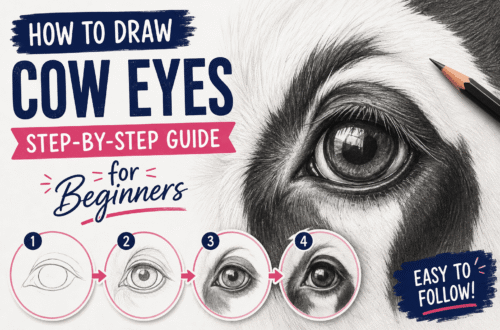
If you are an artist, you know the struggle: you spend hours on a portrait, only for the eyes to look “crazed” or “dead.” Here is why it happens and how to fix it.
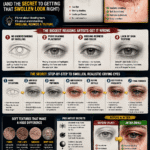
The “Buggy-Eyed” Look
This is the most common pitfall. If you draw the entire iris and pupil surrounded by a ring of white, you lose the natural, relaxed look of human eyelids.
- The Fix: Use the eyelids to “crop” the eyeball. In a resting state, the upper lid should partially cover the top of the iris.
The Problem of Pupil Placement
Pupils that are too small or perfectly centered in a wide-open eye can create a startled or “crazed” expression.
- The Fix: Think of the eye in 3D space. The pupil isn’t just a dot; it’s part of a sphere. Ensure the shading reflects the curvature of the eyeball, and avoid pure white for the sclera—use light creams or grays to reduce the harsh contrast that makes eyes pop in an unnatural way.
Tips for Drawing Eyes That Connect (Without the Creep Factor)
To make your drawings expressive rather than intimidating, follow these fundamental principles:
- Work from the General to the Specific: Don’t start with the eyelashes or the reflection in the pupil. Start with the “envelope” of the eye shape and ensure the proportions relative to the rest of the face are correct.
- Think in 3D: An eye is a sphere sitting in a socket. When drawing from different angles (like a ¾ view), remember that the shape of the eye will distort. If you draw it flat, it will look like a sticker on a face rather than a living feature.
- Use Eyebrows to Control Emotion: The eyes themselves are relatively static. The eyebrows are what convey fear, surprise, or calm. If an eye looks scary, adjust the eyebrow position; bringing them closer to the eye creates a more intense or menacing look, while a neutral placement can help “soften” the expression.
- Avoid Pure White: As mentioned, the sclera is rarely stark white. Adding a hint of shadow or color makes the eye look more organic and grounded.
Conclusion: Embracing the Gaze
Whether you are a viewer experiencing the intensity of a portrait or an artist honing your craft, understanding why we react the way we do to eye drawings is a powerful tool. Art is meant to elicit a response, and even a “creepy” drawing is a testament to the power of the human gaze. By mastering the anatomy and understanding the psychology of perception, you can transform how your audience interacts with your work—turning fear into fascination.